











Every NVIDIA GB300 NVL72 Rack Has 18 Consoles Most Builds Never Cable
GB300 Rack Console Connection Requirements Here’s a port map for both DGX and ODM builds, and how to turn thos…

Built for how enterprise networks work today.
Lantronix Centralized Management Software
Small drones are being asked to do far more than fly. From first-person view (FPV) scouting to intelligence, surveillance, and reconnaissance (ISR), autonomous target tracking, and multi-drone coordination, today’s platforms need serious onboard intelligence.
Mission success now depends on detecting and classifying objects, tracking moving targets, navigating GPS-denied environments, avoiding obstacles, and adapting to changing conditions in real time. Drones are evolving from remotely operated platforms into intelligent systems that understand their surroundings and make decisions on their own.
Traditionally, delivering these capabilities means separate systems for flight control, mission computing, and AI processing, each adding hardware, wiring, software interfaces, and integration risk.
The real challenge isn’t connecting these systems. It’s getting them to work together reliably. Engineers must synchronize sensor data, manage communication between processors, validate software compatibility, and juggle multiple suppliers and product lifecycles.
Lantronix Spotter changes that.
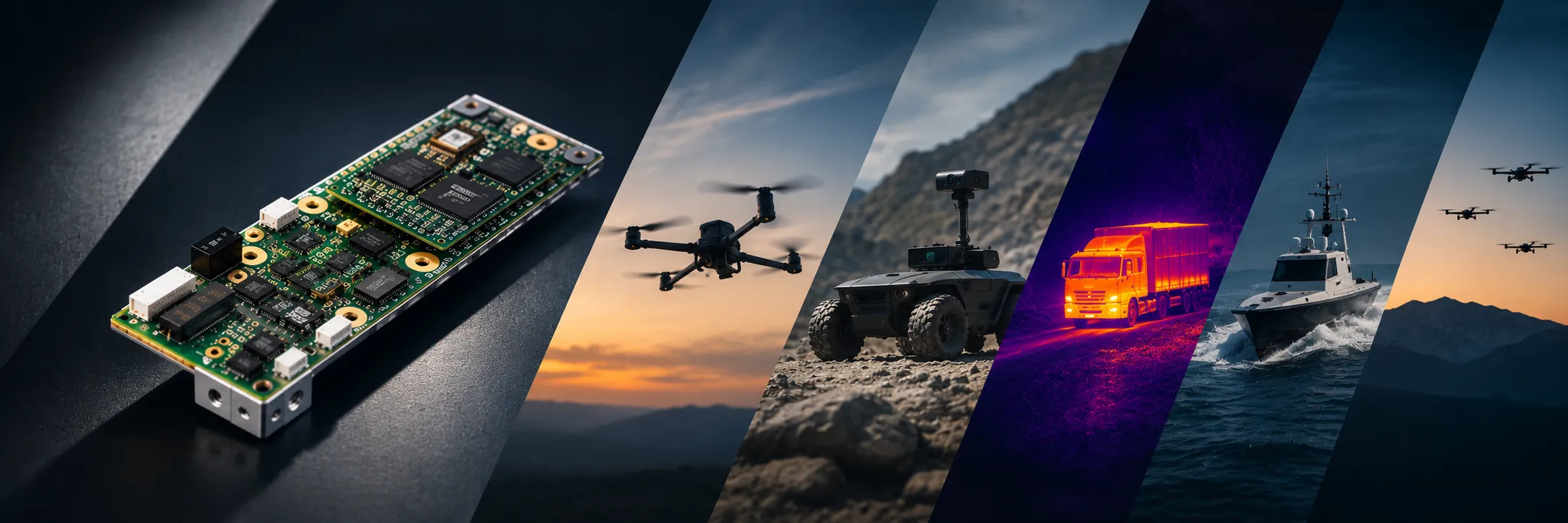
Powered by the Qualcomm Dragonwing QCS6490, Spotter combines Edge AI, advanced vision processing, and an integrated STM32H7 flight controller on a single compact board. The result is one common foundation for flight, perception, and onboard decision-making.
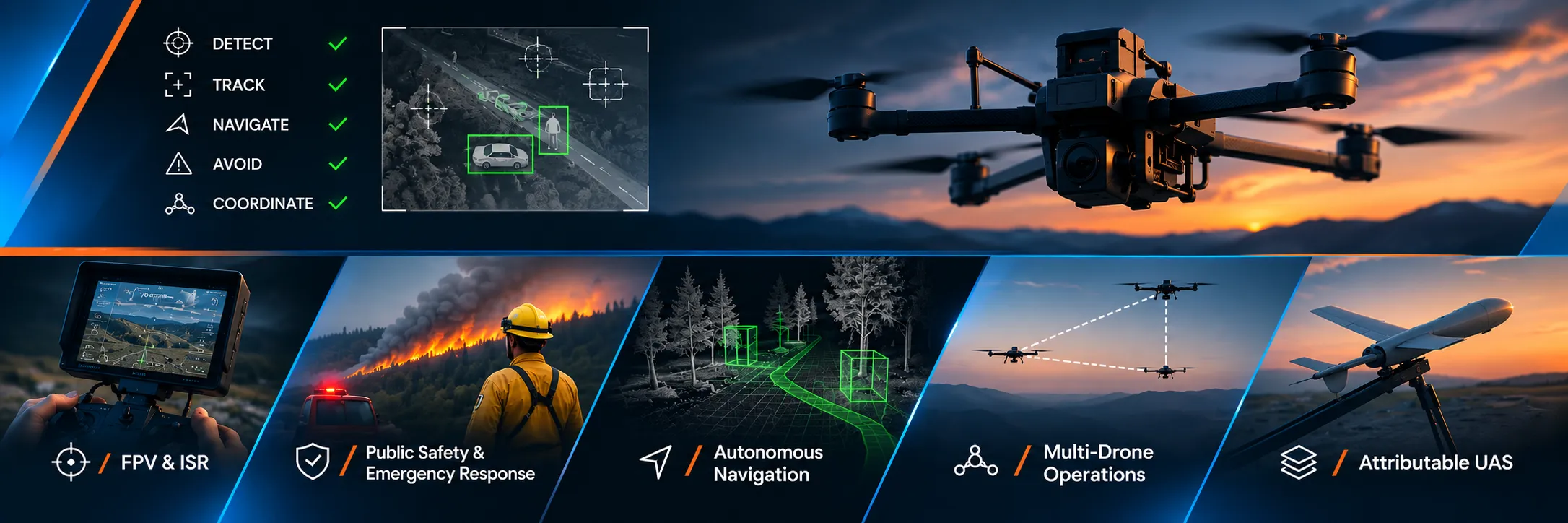
Spotter is designed for a new generation of intelligent unmanned platforms:
As drones evolve into autonomous platforms, the role of onboard computing keeps growing. What once required only basic flight control now includes real-time AI inference, camera processing, sensor fusion, and mission management. SLAM may tell an aircraft where it is, but success depends on understanding what it sees, what matters, and how to respond.
Spotter makes these capabilities easier to integrate by putting the flight controller and mission computer on one board. Compatible with widely adopted open-source flight stacks such as PX4 and ArduPilot, and standard protocols like MAVLink, Spotter lets developers build on existing tools, libraries, and hardware ecosystems instead of starting from scratch.
Support for standard camera interfaces, navigation sensors, radios, and peripherals makes it easy for OEMs to integrate commercially available hardware and tailor platforms to different missions. This open approach reduces reliance on proprietary architectures and gives manufacturers the freedom to develop their own AI and autonomy applications.
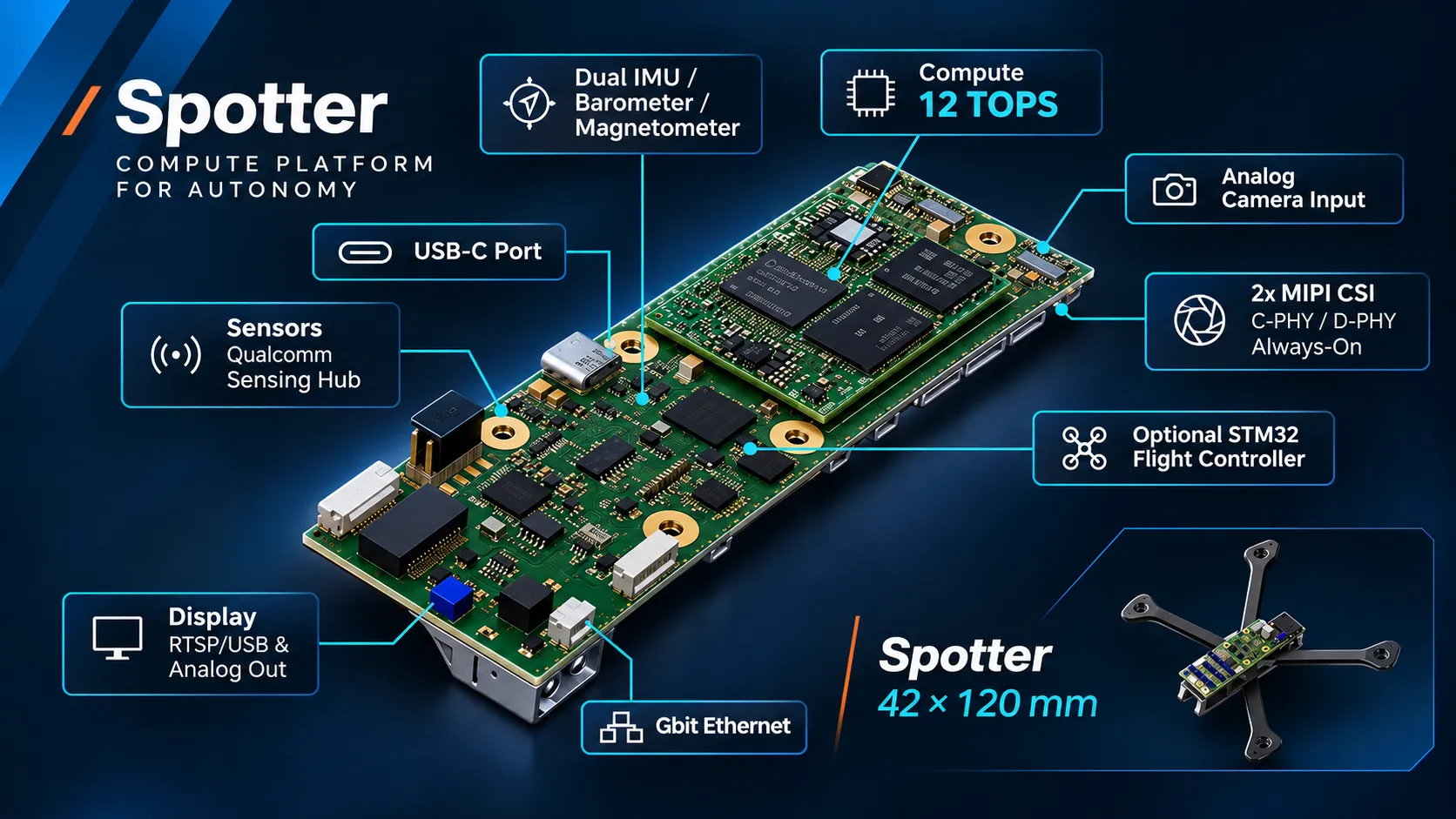
Building an autonomous drone takes more than choosing the right processor or flight controller. It takes a deep understanding of how flight software, navigation sensors, vision systems, communication links, and onboard AI behave together in real-world conditions.
Lantronix brings that understanding from its work developing and integrating drone reference platforms that combine established flight-control solutions with Edge AI, camera processing, and sensor integration. That experience helps OEMs solve the hardest parts of development: communication between the flight controller and mission processor, sensor synchronization, payload integration, power management, and system-level validation.
Instead of coordinating multiple hardware vendors and resolving compatibility issues on their own, customers work with a single partner that understands both flight operations and advanced computing. The result is a faster, lower-risk path from prototype to production, and more engineering time for the features that set their aircraft apart. As requirements evolve, Spotter’s flexible architecture lets customers add new sensors, develop proprietary autonomy software, and expand capabilities without redesigning their computing platform.
The goal isn’t to put more computers on a drone. It’s to make the entire drone more intelligent.

GB300 Rack Console Connection Requirements Here’s a port map for both DGX and ODM builds, and how to turn thos…
Plymouth, MN; September 11, 2026 – As the United States pauses today to remember the lives lost on September 1…
Built for how enterprise networks work today.
Lantronix Centralized Management Software


