











On the air in 30 minutes or less

Getting a system set up quickly can be a hassle, especially if you are looking to add wireless 802.11 connectivity to your product. With the right tools, you can get this done and be up and running in under 30 minutes. One of the quickest ways to do this is with the Lantronix WiBox. With minimal setup (often just a few minutes), it will bridge your serial or wired Ethernet data to Wi-Fi.

Apply Power

Connect to your device via serial or Ethernet, configure communications parameters, if needed

Configure SSID and security parameters to talk to your wireless network

Viola!

The WiBox is licensed for use in most countries and requires no other licensing to use. It comes with a 2.1db gain antenna, and depending on country specific maximums, can be used with higher gain antennas for increased range.

For more information on this versatile product: http://www.lantronix.com/device-networking/external-device-servers/wibox.html

Managing Branch Office Equipment

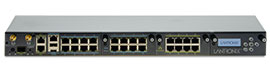
Does your business have small branch offices? Perhaps you have just one or two backend servers in a small rack at each site? Even if you have small branch offices, they can still cause headaches if they are not networked properly.  The Lantronix Branch Office Manager is a great solution. It allows you to remotely monitor all of the console ports securely, contains four ports of remotely controllable AC power, and includes a multiport Ethernet switch. All of this in a single 1RU 19” rack device. We’ve had several large deployments of these and the feedback is excellent.

What else in your branch offices would work better on a network?

Wireless Module Approval

Creating a product with a wireless transmitter inside is challenging for a developer, even when using an unlicensed frequency band (for example 2.45GHz, 802.11b/g/n). The regulatory agencies (i.e. – FCC, IC) in the countries where the product is used often require certification and impose specific limitations on its use (maximum power, antenna type and gain, co-location with other transmitters, distance to human operator). If you are designing a product that will have a transmitter inside, you can save a lot of expense and time by looking for a module that has “module approval”. As long as you use the module within the grants of the regulatory agency and mark the outside of your product appropriately, you are good to go. Not all countries support this, but the world is slowly moving this direction.

Have you leveraged module approval with a Lantronix or other product?

Can you connect your socks to the internet?

The New York Times recently wrote an article about “the internet of things”. While the title of the post may seem silly, the New York Times believes it is only a matter of time before things we never imagined will be connected. The post discusses current technology advances, explaining “car manufacturers are trying to integrate autonomous decision making into cars of the future that could detect imminent collisions and take evasive action at speeds vastly quicker than a human. Some car companies are also experimenting with automotive autopilots in cars that are networked together and can avoid phantom traffic jams or take over from the driver at a moment’s notice.”

One point that the article touches on that is very important to Lantronix is the issue of security. We strive to empower our connectivity products with the latest security standards and rigorously test them for robustness. The last thing you want is your personal info being ‘invaded’.

For me, no matter where I am, being able to check out who’s at the door when the doorbell rings is a great use of the web. What novel item would you like to have connected?

Is it really industrial temperature range?

Lantronix offers products that are specified to operate over a wide temperature range, often -40 to +85C.  It’s great for those outside applications in the Arizona summertime or the Minnesota winter.  You have to be careful though, as some companies ‘guess’ at the temperature ratings of their products without sufficient testing or design.  Here at Lantronix, we start planning carefully at the very beginning to make sure the product will meet the required spec.  We carefully select components and perform calculations to make sure all components will operate across the range.  (If you would like to learn more about the math involved – Theta J, Theta JA, etc., this magazine has had a number of good articles on the subject: http://powerelectronics.com/).  Once we build prototypes, we carefully instrument the product with temperature probes and cycle it through and beyond the specified operating range making sure all is well.  We also do long-term temperature testing on several units to validate endurance.  This is all done so when you receive product you can be confident it will operate as advertised.  I’ll bet that Arizona heat sounds good to a lot of you this winter, doesn’t it?