Cisco defines artificial intelligence (AI) in networking as functionality “that gives computers human-like intelligence when performing a task. When applied to complex IT operations, AI assists with making better, faster decisions and enabling process automation.”
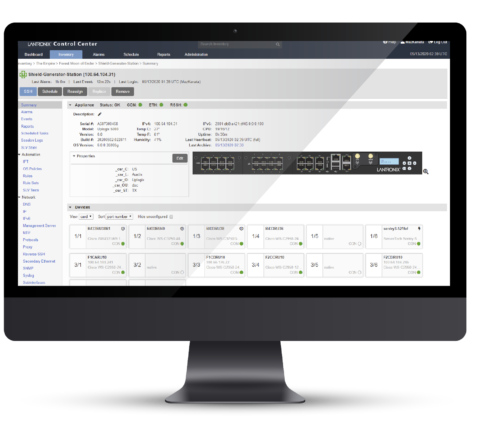
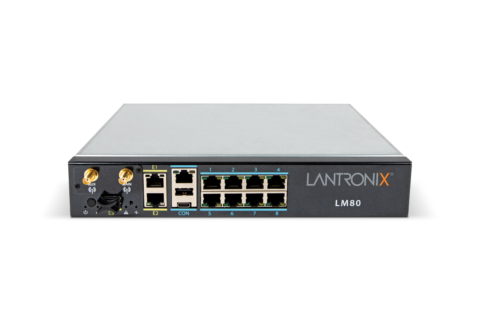
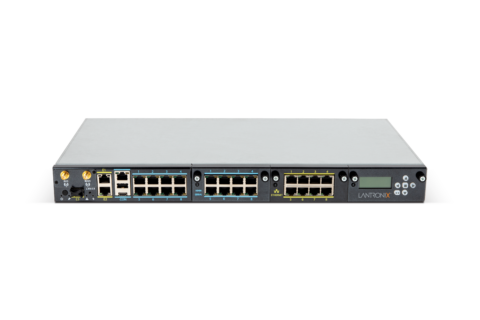
Monitoring managed devices over the console port at a default of every 30 seconds compared to traditional NSM polling frequencies of 15 minutes or longer means that when a device has an issue, the LM-series is going to know about it before the NOC. With an integrated rules engine, the LM serial console server can follow the same runbook steps as an onsite admin.
An expert system using rules-based AI to recover and mitigate network infrastructure securely, reliably, and automatically, the LM deploys in the rack with network infrastructure. Automated IPSLA tests can triage and isolate where the problem is occurring in the network. Then the LM can alarm (in-band or out-of-band to NOC tools) and take actions just like an admin. From clearing an interface, cycling power, even recovering a router in ROMmon state, all of this can happen automatically and often before traditional tools even know there is a problem. Think of it as machine-to-machine network management.
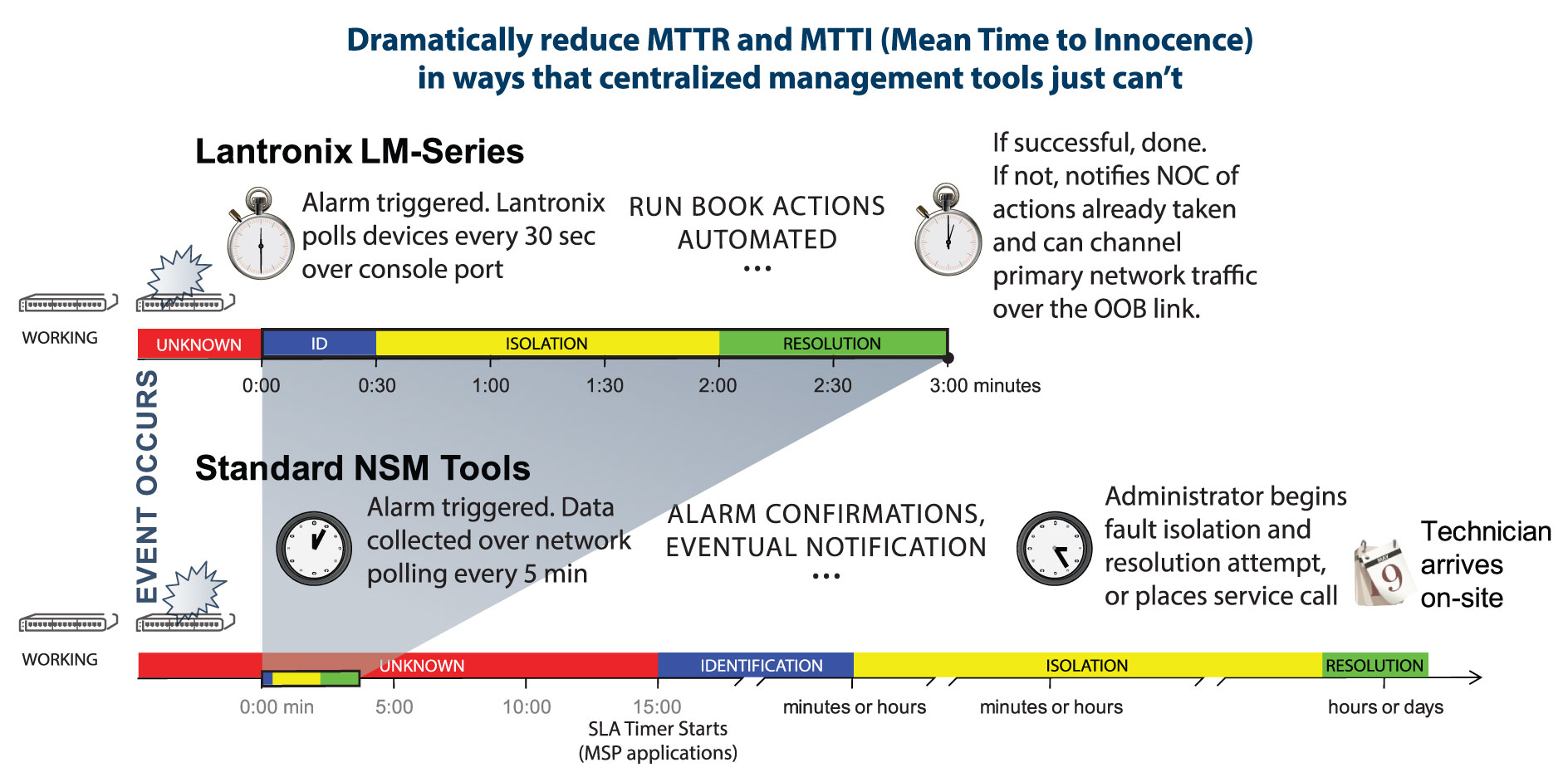 Lantronix LM-Series AI-driven console servers collect data through serial connections to managed devices. This rich diagnostic data feeds a rules-based policy engine to determine if a parameter is in or out of specification. Lantronix can then either automatically resolve the incident based on pre-approved automated operations or communicate information back to centralized IT staff through traditional NOC management tools. All of this happens in less time than most standard management tools take to find the problem and often before users even knew there was an issue.