











Remembering the Events of September 2001
Plymouth, MN; September 11, 2026 – As the United States pauses today to remember the lives lost on September 1…

Built for how enterprise networks work today.
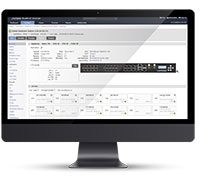
Lantronix Centralized Management Software
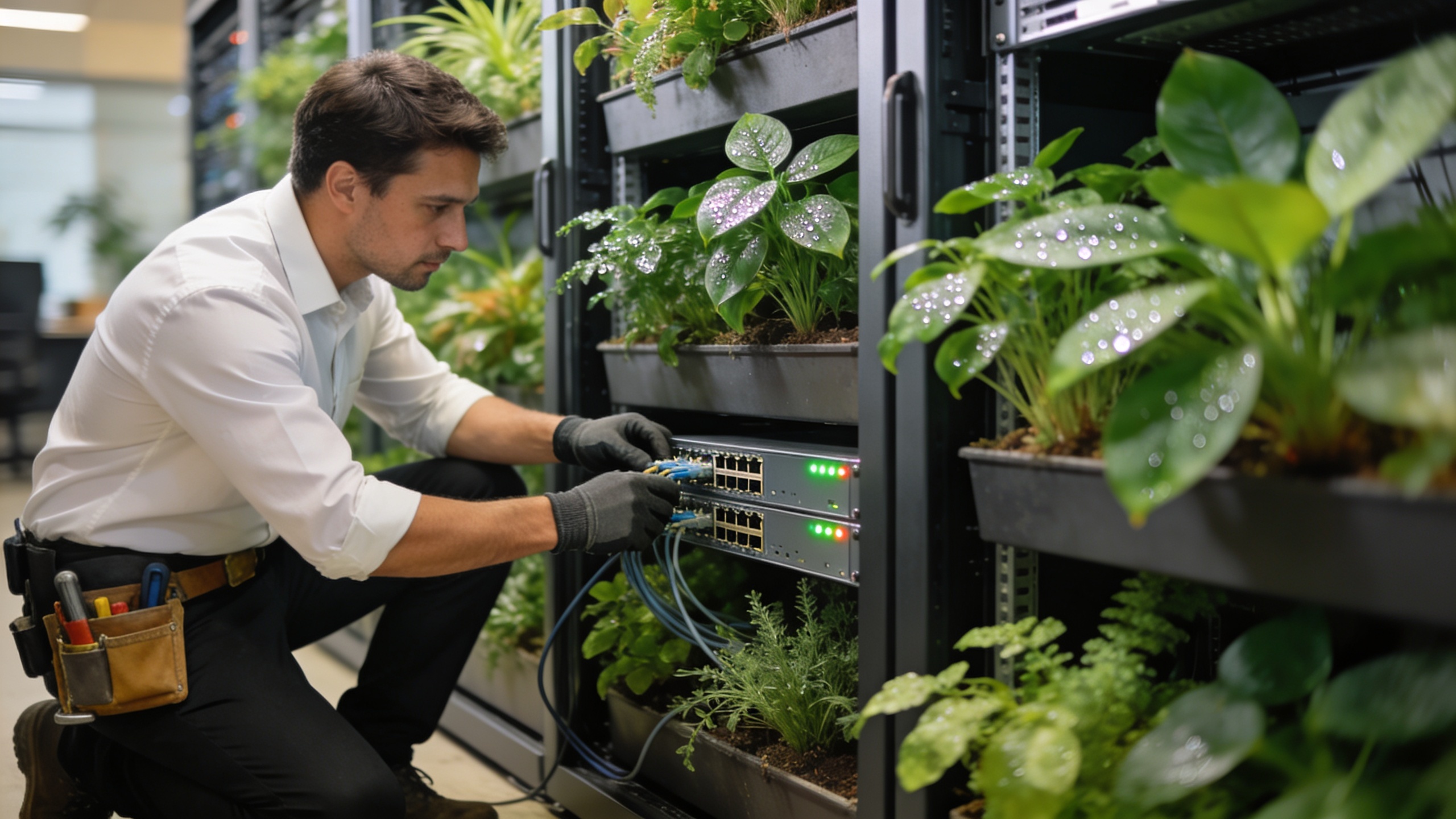
As we celebrate Earth Day, many organizations are looking for ways to align their IT operations with sustainability goals. While much of the conversation around “Green IT” focuses on energy-efficient data centers, there are other ways to reduce an organization’s carbon footprint including Out-of-Band (OOB) Management. By providing a dedicated, network-independent path to manage IT infrastructure, OOB solutions like the Lantronix LM-Series, SLC, and EMG allow IT teams to manage and recover devices without the need for constant travel to branch offices and remote sites.
The most immediate environmental benefit of an advanced OOB platform is the drastic reduction in truck rolls. In traditional setups, a network failure often requires a technician to physically travel to a remote site, sometimes up to hundreds of miles away, just to perform a simple task like a hard power cycle or a configuration fix. With out-of-band, administrators have hardware-level access to routers, switches, and firewalls even when the primary network is down. By resolving issues remotely, companies can eliminate thousands of miles of vehicle travel each year, directly lowering CO2 emissions and operational costs.
Sustainability is further enhanced through AI-driven automation. The LM-Series acts as an expert system that monitors connected devices over the console port as frequently as every 30 seconds, detecting issues far faster than traditional tools. When a problem is identified, the platform can automatically execute runbook actions like cycling power or performing automated ROMmon recovery to fix the issue before a human ever needs to intervene. This proactive, machine-to-machine management means fewer emergency site visits and a more resilient and secure network.
Finally, the shift toward a greener network begins at deployment. Zero-Touch Provisioning (ZTP) allows newly deployed LM-Series devices to automatically register with the Lantronix Control Center. This eliminates the need to stage equipment at a central hub and, more importantly, removes the requirement to send deeply technical personnel to remote sites just for installation.
So, maybe it’s not as big of an impact as moving your data center to geothermal power, but every little bit helps, right? Next time you find yourself sitting in traffic on the way to troubleshoot a network issue at a remote location, think about if out-of-band management could save you the trip and stay a little greener (plus make your network more resilient and secure!).
Plymouth, MN; September 11, 2026 – As the United States pauses today to remember the lives lost on September 1…
Percepxion and SLC 9000 Join the NetClaw Community Network admins are actively exploring AI that targets their…
Built for how enterprise networks work today.
Lantronix Centralized Management Software