
Walk the floor of almost any manufacturing plant and you’ll find air compressors running as part of critical industrial IoT monitoring. They’re powering assembly tools, spray booths, conveyor systems, and pneumatic actuators, and they’re consuming a staggering share of the facility’s electricity bill. Yet in most plants, the only “monitoring” they receive is a walk-by from a technician and a maintenance schedule that hasn’t changed since the equipment was installed.
That’s about to change.
Traditional compressor monitoring has one fundamental flaw: it counts running hours, not productive hours. A compressor that ran for 10 hours today looks fine on paper, even if 3 of those hours it was unloaded, spinning and burning power while producing no compressed air at all. This is one of the biggest contributors to energy waste in compressed air systems.
AI-driven monitoring goes much deeper. It distinguishes between three operating states: Load (the compressor is doing its job), Unload (running but producing nothing), and Idle (standing by). Suddenly, a real picture of utilization emerges, and in most facilities, that picture is uncomfortable.
“Customers see if compressors are actually working efficiently or just running empty.”
The language of traditional maintenance is reactive: something failed, now fix it. Predictive maintenance for compressed air systems has been discussed for years, but implementations often stopped at simple threshold alerts. If the temperature exceeds 200°F, send an email.
What AI brings to compressed air is something more nuanced:Â prescriptive monitoring, correlating multiple signals across time to identify the specific component at risk, before a single threshold is crossed. A slowly rising unload cycle frequency, combined with a modest temperature drift, combined with slightly higher-than-baseline energy draw. Individually, none of these trigger an alert. Together, they point to a valve that’s beginning to leak.
That kind of insight turns a potential emergency shutdown into a planned maintenance task on the next convenient Friday morning.
One barrier that has historically slowed adoption of monitoring technology is integration complexity. A facility with three compressors from three different manufacturers, installed across two decades, has traditionally required separate software for each, if software existed at all.
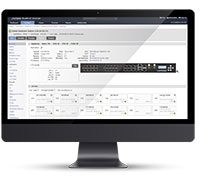
“Kompress.ai acts as a unified industrial IoT monitoring platform for compressors. The Lantronix Fox gateway connects to virtually any compressor regardless of brand or vintage, transmits data over an included cellular plan, and feeds a cloud analytics platform purpose-built for compressed air. The mobile app keeps operations and service teams informed wherever they are. There’s one subscription, one dashboard, and no complex IT project to stand up.
“Manage compressors. Any vendor, any age.”
Energy savings alone from compressed air system optimization, with documented reductions of up to 30%, typically justify the investment within months for mid-to-large compressed air systems. Add in the avoided cost of a single unplanned compressor failure (lost production, emergency service, expedited parts), and the ROI becomes difficult to argue against.
For compressor OEMs and dealers, the story is even more compelling: intelligent monitoring transforms a one-time sale into an ongoing service relationship, and creates differentiated value that competitors without data capabilities simply cannot match.
Download the complete guide, “AI Meets Compressed Air: A Playbook for Intelligent Monitoring,” and learn how Kompress.ai can deliver measurable results for your facility or your customers.
Or stop by for a live demonstration at AICD 2026, April 19-21, at the Rosen Center in Orlando Fla.